Dry Needling / IMS in Barrhaven, Ottawa
Dry needling (IMS) is a targeted technique using thin needles to address specific muscle trigger points, and may be considered for selected neuromuscular pain presentations.
What Is Dry Needling?
Dry needling (IMS) is a targeted technique using thin needles to address specific muscle trigger points, and may be considered for selected neuromuscular pain presentations.
How Dry Needling May Support Your Rehabilitation
This treatment is selected only when it fits your assessment, goals and overall rehabilitation plan.
- Target selected areas of muscle sensitivity or tension
- Support comfortable movement when paired with rehabilitation
- Complement exercise, education and hands-on care
- Be adjusted or stopped based on your comfort and response
How We Use Dry Needling / IMS
- Trigger-point identification and needling
- Intramuscular stimulation (IMS) for muscle tension
- Combined use with manual therapy and exercise
Conditions This Treatment May Be Used For
Your assessment determines whether this treatment is appropriate. It may be considered for selected presentations such as:
What to Expect During Your Appointment
We identify the muscles or trigger points contributing to your symptoms.
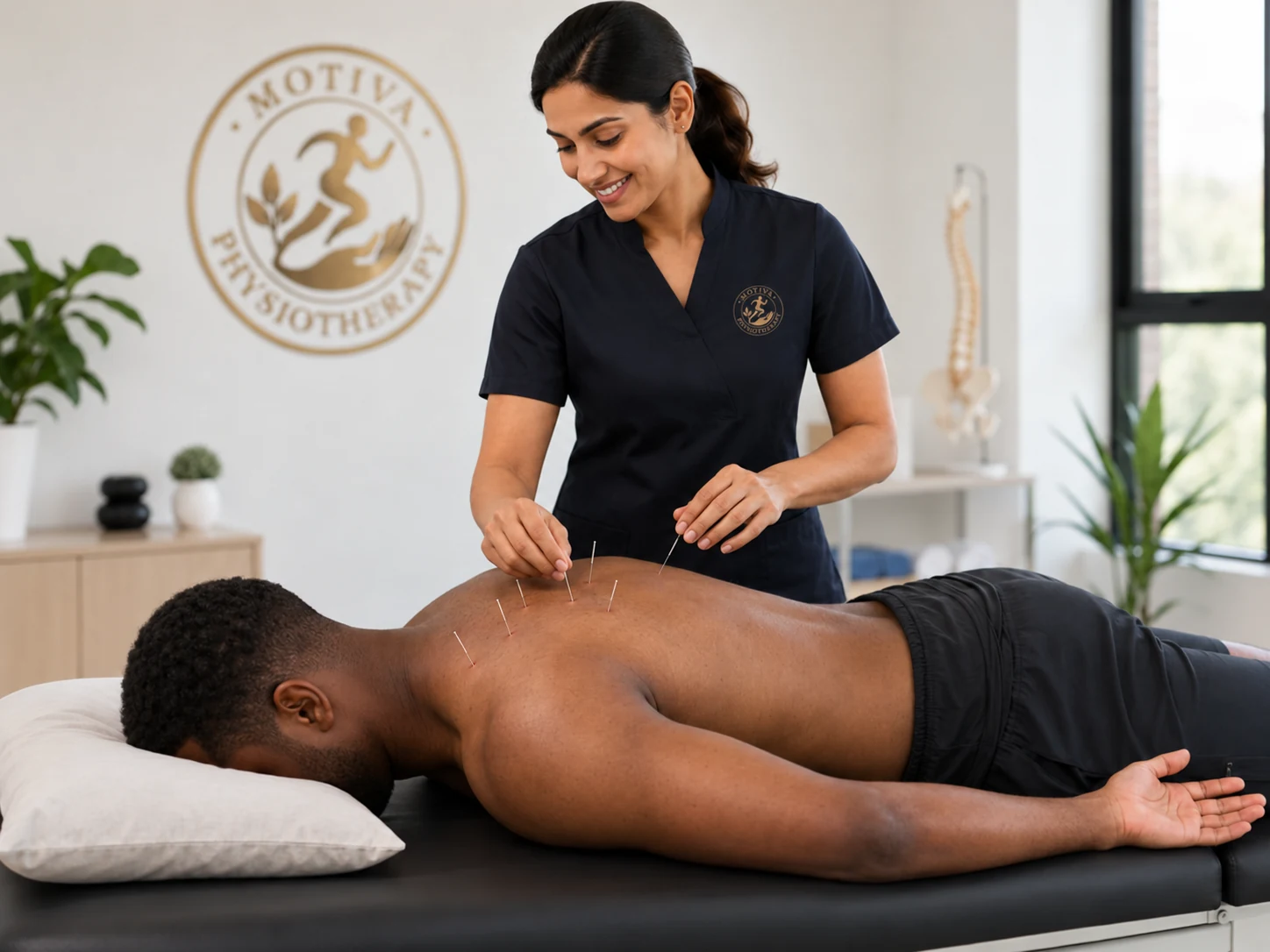
Thin needles are inserted into the targeted muscle tissue; a brief muscle twitch response is common and expected.
Treatment is usually brief and combined with other care in the same visit.
We discuss expected post-treatment soreness and self-care for the following day.
After Dry Needling
Temporary muscle soreness or tenderness can occur after needling. We explain what is normal, whether to modify activity that day, and which exercises or movements are useful as part of the next step in your rehabilitation.
Is This Treatment Right for Me?
Suitability, frequency and whether this treatment is combined with other care depend on your assessment, health history, goals, preferences and response. Your physiotherapist will explain the reasoning before including it in your plan.
Dry Needling FAQ
What is dry needling?
Dry needling uses very thin, sterile needles inserted into selected muscle tissue. In physiotherapy it may be used to address muscle sensitivity or tension while supporting a broader plan that includes movement and exercise.
Is dry needling the same as acupuncture?
No. The two approaches can use similar sterile filiform needles, but they come from different assessment frameworks and treatment philosophies. Your physiotherapist can explain which approach is being recommended and why.
What does dry needling feel like?
People describe different sensations, including a brief pinch, pressure, a muscle twitch or temporary soreness. Your physiotherapist will explain what to expect and can stop at any time if you are uncomfortable.
How does my physiotherapist determine if it is appropriate?
Suitability depends on your assessment, health history, medications, symptoms, goals and personal preferences. Dry needling is not appropriate for everyone and is only considered when it fits the overall treatment plan.
What should I expect afterward?
Temporary tenderness or muscle soreness can occur. Your physiotherapist may recommend gentle movement, hydration and specific exercises, and will discuss what is normal and when to contact the clinic.
Other Services That May Be Part of Your Plan
Your care plan may combine or sequence services when they are appropriate for your presentation and goals.